
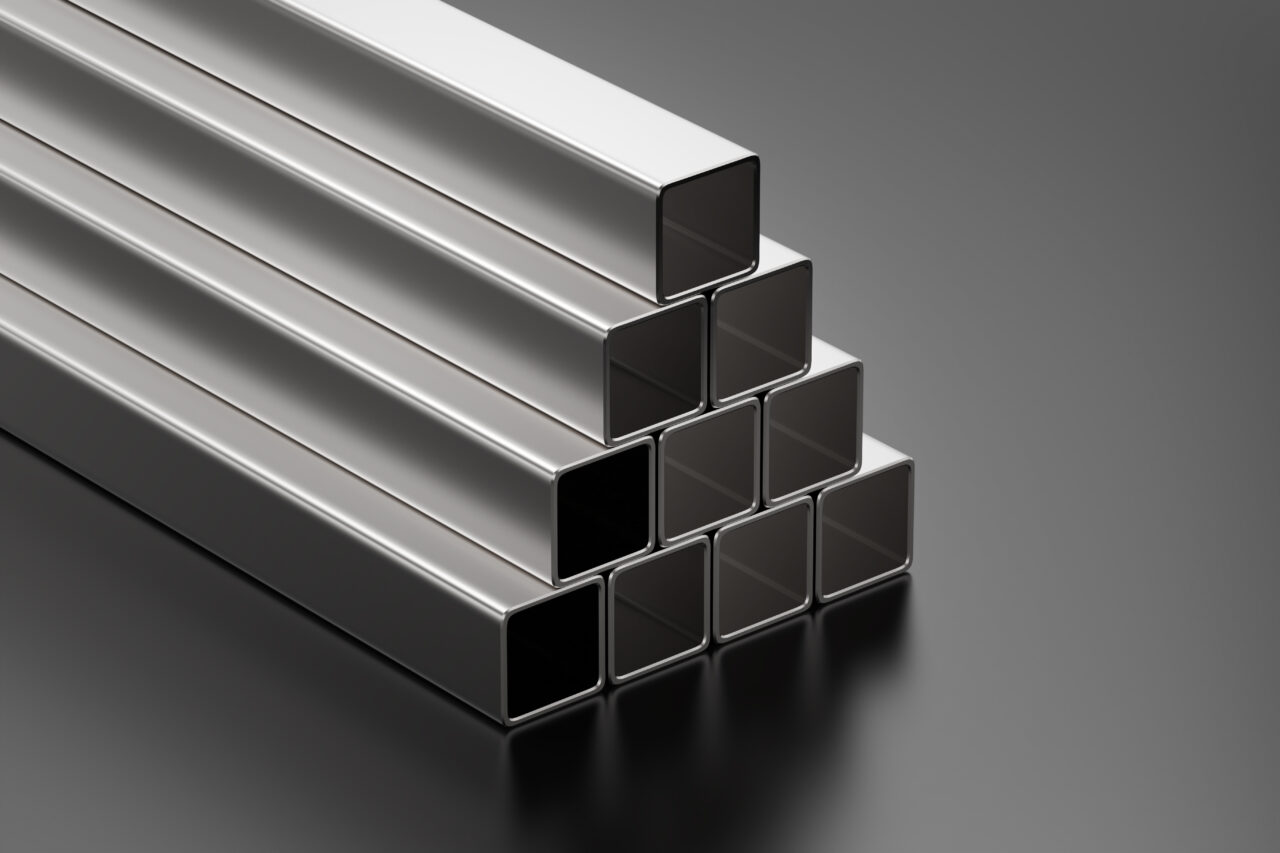
Stainless steel offers exceptional temperature resistance in biogas production environments, maintaining structural integrity across operating temperatures from -50°C to over 900°C depending on grade selection. Its low thermal expansion coefficient prevents warping during temperature fluctuations, while its crystalline structure remains stable under thermal cycling. These properties make stainless steel—particularly high-strength grades like lean duplex—ideal for biogas facilities where temperature variations and corrosive conditions combine to create challenging structural requirements.
Biogas production demands materials that withstand both temperature extremes and corrosive environments. Explore our complete range of high-strength stainless steel products engineered specifically for these demanding conditions.
What temperature resistance properties make stainless steel ideal for biogas production?
Stainless steel excels in biogas production because of its exceptional stability across the wide temperature range encountered in these facilities (-50°C to over 900°C). The material’s low thermal expansion coefficient (typically 16-18 × 10-6/°C) minimises dimensional changes during heating and cooling cycles, preventing warping and maintaining structural integrity throughout operational temperature fluctuations.
This temperature stability results from stainless steel’s unique crystalline structure, which resists deformation under thermal stress. The chromium content (minimum 10.5%) creates a self-healing passive oxide layer that remains effective even as temperatures rise, ensuring continuous protection against both heat and corrosion—a crucial combination in biogas environments.
Furthermore, high-strength stainless steel hollow sections distribute thermal loads uniformly, preventing localised stress concentrations that might otherwise lead to structural failure. This load distribution capability is particularly valuable in biogas digesters and processing equipment where temperature gradients occur regularly during operation. The material maintains its mechanical properties, including tensile strength and impact resistance, even after thousands of thermal cycles, ensuring long-term reliability in facilities expected to operate continuously for decades.
How do different stainless steel grades perform in biogas production temperature conditions?
Lean duplex stainless steel (LDX) outperforms standard austenitic grades in biogas production temperature conditions, maintaining superior strength at both elevated temperatures and during thermal cycling. While standard 304/304L grades begin strength degradation above 425°C, lean duplex retains approximately 90% of its room temperature yield strength at 300°C and maintains significant structural integrity up to 500°C.
The comparative performance of different grades can be evaluated across several key parameters:
| Stainless Steel Grade | Maximum Service Temperature | Strength Retention | Thermal Cycling Resistance |
|---|---|---|---|
| Lean Duplex (LDX) | 500°C | Excellent | Superior |
| Austenitic (304/316) | 425°C | Good | Good |
| Ferritic (430) | 400°C | Moderate | Limited |
This superior performance stems from lean duplex’s unique microstructure, which combines austenitic and ferritic phases. This dual-phase structure provides greater resistance to thermal expansion and contraction stresses. Additionally, lean duplex exhibits better thermal conductivity, allowing for more uniform heat distribution and fewer hot spots—critical in biogas production where uneven temperature distribution can accelerate corrosion and reduce structural integrity.
What corrosion challenges do temperature fluctuations create in biogas environments?
Temperature fluctuations in biogas environments accelerate corrosion through multiple mechanisms, creating a particularly aggressive environment for structural materials. The combination of heat cycling with hydrogen sulfide (H₂S), carbon dioxide (CO₂), and organic acids creates conditions where corrosion rates can increase up to tenfold compared to stable temperature environments.
The primary temperature-related corrosion challenges include:
- Accelerated chemical reactions – Each 10°C temperature increase typically doubles the rate of electrochemical corrosion reactions
- Condensation corrosion – Temperature differentials cause acidic vapour condensation on cooler surfaces, creating localised corrosion cells
- Thermal expansion stress – Repeated expansion and contraction can crack protective oxide layers, exposing fresh metal to corrosive attack
- Microbiologically influenced corrosion (MIC) – Temperature fluctuations create ideal conditions for corrosion-causing microorganisms that thrive in specific temperature ranges
High-strength stainless steel, particularly lean duplex grades, counters these challenges through superior pitting resistance equivalent (PRE) values and stable passive layer formation. The material’s inherent resistance to stress corrosion cracking (SCC) prevents the initiation and propagation of cracks during thermal cycling—a critical advantage over carbon steel or lower-grade stainless options that would rapidly deteriorate under the same conditions.
How do stainless steel hollow sections maintain structural stability under biogas temperature variations?
Stainless steel hollow sections maintain exceptional structural stability under biogas temperature variations through their uniform strength distribution across all axes, creating inherently stable structures that resist deformation during thermal cycling. Square and rectangular hollow sections provide equal strength in compression and tension, preventing distortion when exposed to the thermal expansion and contraction common in biogas production.
The closed profile of hollow sections offers several critical advantages in temperature-variable environments:
- Lower surface-to-mass ratio minimises heat transfer rates, reducing thermal shock
- Uniform wall thickness ensures consistent temperature distribution and stress management
- Superior torsional rigidity prevents twisting under thermal gradient loads
- Internal void space provides natural insulation properties, buffering rapid temperature changes
The forming process used to create these sections—roll forming or press braking—further enhances their thermal stability by distributing material evenly throughout the profile. This manufacturing precision ensures consistent wall thickness, which is vital for predictable thermal behaviour and structural response under fluctuating temperature conditions.
Additionally, the high section modulus-to-weight ratio means less material is required for the same load-bearing capacity, reducing thermal mass while maintaining structural integrity. This efficient design principle creates structures that respond more predictably to temperature changes while requiring less energy to heat or cool—an important consideration for the overall efficiency of biogas operations.
What makes high-strength stainless steel economically advantageous for temperature-variable biogas applications?
High-strength stainless steel delivers substantial economic advantages in temperature-variable biogas applications primarily through its exceptional longevity and reduced maintenance requirements. While initial investment may be 1.5-2 times higher than carbon steel alternatives, the total lifecycle cost proves significantly lower due to service lifespans often exceeding 30 years without major repair or replacement needs.
The material’s higher strength-to-weight ratio permits significant weight reduction—typically 20-30% compared to standard stainless grades—without compromising structural integrity. This translates directly to lower foundation requirements, reduced transport costs, and faster installation timeframes.
From a maintenance perspective, high-strength stainless steel provides compelling economic benefits:
- Elimination of costly protective coatings and their periodic renewal
- No production downtime for corrosion repairs or structural remediation
- Reduced inspection frequency and scope requirements
- Consistent performance throughout the facility lifecycle without degradation
The sustainability advantages further enhance economic value through reduced environmental impact, lower energy requirements during operation, and complete recyclability at end of service. These factors increasingly translate to tangible financial benefits through carbon reduction incentives, regulatory compliance, and enhanced corporate sustainability profiles.
Contact our experts to discuss how our high-strength stainless steel solutions can optimise your biogas production facility’s performance while reducing lifetime costs.
This article was created with the help of AI and reviewed by a human. It may include mistakes.